2026-09-24 12:26
速览
本文来自微信公众号: 环球科学科研圈 ,作者:领研网,原文标题:《精子,被严重低估了|科学60秒》
生殖医学门诊里,挤满了因生育困难而焦虑的夫妻。在这场漫长而艰难的努力中,女性往往承受着更多的生理与心理压力。即便通过试管婴儿等辅助生殖技术成功受孕,依然有近20%的妊娠以流产告终,而流产带来的身心创伤,绝大部分要由女性独自承受。
一次成功的妊娠中,精子与卵子的结合只是起点,后续还要经历胚胎发育、着床等重重考验,直至诞下健康胎儿。人们常常以为,一旦受孕成功,后续的一切就只和母体有关,但近几年的研究表明,即便夫妻成功受孕,精子的质量会持续影响整个妊娠过程。
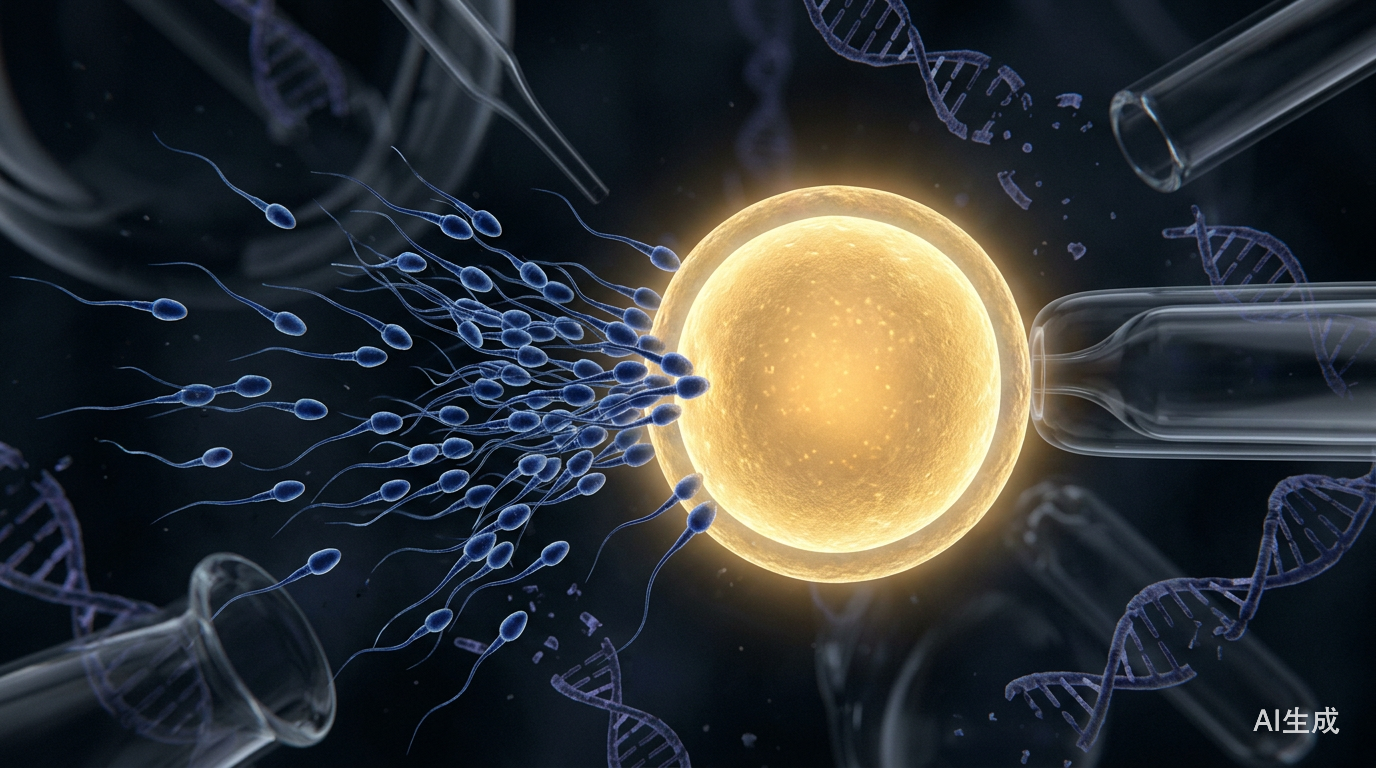
男性精子及其携带的DNA对妊娠结局的影响,远超人们的想象。学界已经证实,精子DNA碎片化(DNA fragmentation)——即精子携带的遗传信息发生断裂或损伤——与流产之间存在相关性,还与较低的体外受精活产率(成功分娩存活婴儿的比例)有关。针对这一问题的检测技术其实早在几十年前就已问世。更令人鼓舞的是,在部分病例中,仅须一些简单的干预即可大幅提高生育成功率,如戒酒、改善饮食、增加运动、补充特定营养素等。
可在现实中,夫妻寻求生殖医学帮助时,精子问题一直没有得到应有的重视。在中国,不孕不育配套的标准检查中,女性一方要完成10余项常规检查,涵盖激素、卵巢储备、输卵管、子宫、免疫、染色体等多个维度;男性一方则通常只有2~3项,其中最核心的仅有精液常规分析,主要检测精子数量与活力——简言之,就是看它们能否顺利抵达卵子。
在美国,直到2026年,美国生殖医学学会(ASRM)14年以来首次更新了《复发性妊娠丢失评估与处理》委员会意见,才将精子DNA碎片化检测正式纳入推荐范围,且仅限于流产组织遗传学评估与子宫结构检查均未发现其他原因的情况,不适用于所有经历过反复流产的患者。
这不禁让人追问:既然精子DNA如此重要,为什么不一开始就检测,非要等到女方的检查全部排处之后?
这些问题的答案或许并不完全根源于科学。男性在生育过程中承担着不可替代的角色,胎儿的DNA有一半来自父亲。在所有不孕不育案例中,男性因素贡献的比例可高达50%。其中约20%的病例完全因为精子存在某种问题;另有30%~40%的病例是精子问题与卵子问题或女方其他因素并存的结果。
然而,生殖医学界真正意识到精子可能与流产相关,也不过是最近几十年的事。临床上有一个反复出现的现象引起了医生们的注意:一些经历过多次流产的女性,在更换伴侣后顺利怀孕并生下了健康的孩子。全球生殖医学集团旗下波士顿IVF(Boston IVF)的首席科学官丹尼·萨卡斯(Denny Sakkas)表示,“从这一点出发,人们隐约发觉,反复流产可能与男方有关。”
丹尼正是这一领域的开拓者之一。他在1990年代分析了不孕男性的精子DNA,首次发现其分子结构中存在“微小断裂”。这一观察正是后来精子DNA碎片化检测诞生的科学基础。围绕“男性不孕不育”,目前仍有大量科学问题有待探索。好在随着医学研究与文化讨论的同步升温,精子健康逐渐被推向公众视野的中心。
学术层面,相关研究正在获得越来越多的关注,临床医生也开始更认真地对待男性不孕不育因素。文化层面上,欧美社媒近期兴起了一场名为“精子最大化”(sperm maxxing)的风潮:越来越多的男性开始为改善生殖健康而调整生活方式,包括但不限于认真吃饭、减少饮酒、戒掉成瘾物质等。
对于备孕女性而言,最痛苦的莫过于反复流产。在这一过程中,精子究竟发挥着怎样的作用?
如果精子携带的DNA本身就存在损伤,受精卵的正常发育就可能受到干扰。精子DNA碎片化检测正是针对这一问题而设计的:它通过量化DNA双螺旋链上微小断裂点的比例,评估精子遗传物质的完整程度。医生可以据此告诉一位男性,他的精子DNA损伤处于轻度、中度还是重度。
丹尼给出过一个形象的比喻:“DNA就像一本使用说明书。如果说明书里存在大量拼写错误,你或许仍然可以怀孕,但当妊娠发展到某个关键阶段,比如某个‘拼写错误’恰好落在心脏组织发育的说明上,妊娠就无法继续。”这同时解释了一个此前令人困惑的临床现象:为什么一些精子DNA受损的男性能够让伴侣受孕,胚胎却在几周之后停止发育。
得到检测结果后,医生可以采取相应干预手段,比如针对某类特定病因(如精索静脉曲张)的外科手术方案。但这项检测更具普遍意义的临床价值在于,它可以促使男性主动思考:自己能做些什么改善精子的健康状况?是否可以更均衡地饮食、多吃蔬果?是否可以坚持运动,保持健康生活习惯?此外,学界也有大量文献探讨各种维生素与营养补充剂对精子质量的改善作用。
从这个角度而言,精子DNA碎片化检测也是一次健康提示,它让男性直面精子状态不理想的现实,告诉他们这可能正是不孕不育的根源所在,必须作出改变。
如果说DNA碎片化揭示的是精子“硬件层面”的损伤,近年来另一个更颠覆性的发现,指向了精子的“软件层面”……[查看全文]
New recommendations spotlight sperm’s role in recurrent miscarriage
Rachel Feltman:For Scientific American’s Science Quickly,I’m Rachel Feltman.
When heterosexual couples struggling to conceive seek medical assistance,sperm often don’t get as much attention as they should.Standard tests measure sperm count and motility,but this ultimately just shows how likely a sperm is to make it to the egg.And that moment of conception is just the first of many steps to the implantation of a growing embryo,let alone the gestation of a healthy fetus.
We now know that,even if couples manage to conceive,problems with sperm can interfere with the pregnancy.Research has shown a connection between DNA fragmentation,which is when the genetic information stored within sperm is broken or otherwise damaged,and miscarriage.It’s also been linked to lower IVF live birth rates,which makes sense:in vitro fertilization gets the sperm through the door,so to speak,but if half of the resulting embryo’s DNA is potentially damaged,it’s less likely to develop normally and progress into a healthy pregnancy once implanted.
The good news is that there are tests for DNA fragmentation in sperm.In fact,they’ve been around for decades.And the even better news is that,at least in some cases,successful intervention can be as simple as cutting out alcohol,improving your diet and exercise and taking a few supplements.
Earlier this year,the American Society for Reproductive Medicine updated its recommendations for assessing and treating recurrent pregnancy loss for the first time since 2012.Sperm DNA fragmentation testing was finally recommended but not for all patients who’ve had repeated miscarriages—only in cases where genetic evaluations of miscarriage tissue and tests on the structure of the uterus haven’t revealed another cause.Which begs the question,why aren’t people hoping to conceive being taught about the importance of sperm DNA and offered testing for it from the start?
Here to unpack this for us is freelance science journalist Sarah Elizabeth Richards,the author of a recent story on the subject for Scientific American.
Thanks for joining us today.So for listeners who don’t have as much,you know,experience reading about writing about this field,just how big is the disparity between the research and even conversation around female infertility issues and those same conversations and studies related to sperm?
Sarah Elizabeth Richards:Well,that’s a great question.So the background,and people don’t really know about this,is that men contribute to 50 percent of infertility problems.And I think there was a quote in the story,it’s like I think 20 percent of cases are just the sperm alone,and then another 30 to 40 percent are the sperm and the egg alone,or the sperm and women—whatever they’re dealing with.
So men obviously play a huge role;they have to give half of the DNA they have to make the baby,but they also,there’s a lot that can go wrong or a lot to explore on,you know,why they might be experiencing infertility as a couple.
So there’s a lot of science behind it,and it’s getting a lot more recognition.A lot more doctors are paying a lot more attention to it.Culturally,there’s another piece:[it]is that I think more,you know,people are recognizing the role of sperm.You’ve got this trend of“sperm maxxing”and men doing all of these things to have the optimal sperm and eating well,drinking less,smoking less pot,which are obviously really important things.So at the same time,you’ve got a lot more medical and scientific research.You’ve got,culturally,a lot more people paying attention to sperm.
Feltman:Yeah.So what do we know,currently,about the ways in which sperm can contribute to,you know,this risk of recurrent miscarriage?
Richards:So for this test specifically,which measures what they call DNA fragmentation,and that’s the idea that on a piece of DNA,there’s these little breaks,and these little breaks can mess up the instruction booklet,right,when you,you make a baby.And so what this test does is:it measures that level.So a doctor can go back to a man and say,you know,“You’ve got a high level of sperm damage,”which is measured in this DNA fragmentation,“You’ve got a light level,”“You’ve got a high level.”And then,based on that,you know,there are certain surgical techniques they can do.But,like,the bigger message or one way it can be helpful in the clinic is that it sends the message to men as like,“Okay,well,what things can I do to improve the health of my sperm?”You know,“Can I eat better,eat more fruits and vegetables?Can I drink less,smoke less pot,exercise?”I think there’s a whole list of different vitamin supplements you can take,this is beyond my knowledge,but apparently there’s a whole literature on things you can do to improve your sperm.I think,in that way,it can be useful to say,like,“Look,your sperm actually ain’t great,and it could be causing the problem.So it’s something you might wanna pay attention to.”...[full transcript]
本内容来源于网络 原文链接,观点仅代表作者本人,不代表虎嗅立场。
如涉及版权问题请联系 hezuo@huxiu.com,我们将及时核实并处理。
如涉及版权问题请联系 hezuo@huxiu.com,我们将及时核实并处理。
频道: 健康