2026-11-16 10:50
速览
本文来自微信公众号: IPP评论 ,作者:Mehri Madarshahi,原文标题:《APEC时间|Mehri Madarshahi:从全球化走向地缘经济时代——经济安全背景下对APEC开放区域主义的重新思考》
导语:11月18日至19日,亚太经合组织(APEC)第三十三次领导人非正式会议将在深圳举行,中国时隔12年再次担任APEC东道主。太平洋经济合作理事会(PECC)11月发布的最新报告显示,51%的受访者对未来两三年亚太经济增长持乐观态度,明显高于对全球经济的乐观预期。不过,保护主义、贸易战和供应链中断仍是各方最为关注的风险。如何在保持经济开放的同时有效应对这些风险,成为亚太区域合作面临的重要课题。
本文指出,APEC未来能否继续发挥重要作用,关键在于能否在坚持开放原则的同时,更有效地应对经济相互依赖带来的脆弱性。这并不意味着APEC需要转变为安全组织,也不意味着21个成员经济体必须遵循统一的经济模式。相反,APEC应当赋予“开放区域主义”新的时代内涵,更加重视区域韧性、互操作性和具有韧性的经济网络建设,使各经济体即使存在战略分歧,也能够继续开展合作。
从全球化走向地缘经济时代——
经济安全背景下对APEC开放区域主义的重新思考
FROM GLOBALIZATION TO GEOECONOMICS:
Rethinking APEC's Open Regionalism in the Age of Economic Security
IPP荣誉教授、联合国教科文组织下属国际创意和可持续发展中心(ICCSD)顾问委员会成员
过去30多年来,亚太地区一直是全球化进程的最大受益地区之一。贸易扩张、跨境投资、技术创新以及生产网络的日益一体化,推动亚太地区发展成为全球最具活力的生产、贸易和创新中心之一。亚太经合组织(APEC)正是在这一背景下应运而生,并成为这一进程中最具特色的区域合作机制之一。
For more than three decades,the Asia-Pacific has been one of the greatest beneficiaries of globalization.Expanding trade,cross-border investment,technological innovation and increasingly integrated production networks transformed the region into one of the world's most dynamic centres of production,commerce and innovation.APEC emerged within this environment and became one of its most distinctive institutional expressions.
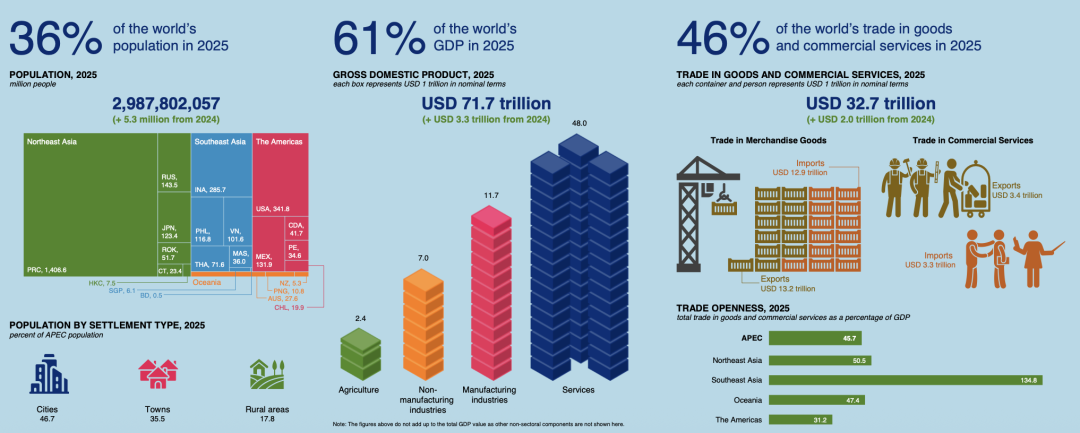
2025年亚太经合组织(APEC)成员经济体人口、GDP及贸易规模概况。APEC成员经济体人口占全球人口的36%;GDP总量占全球的61%;货物和商业服务贸易总额占全球的46%。图源:《2026年APEC图表报告》(APEC in Charts 2026)
推动这一转型的经济理念相对简单明了:扩大开放能够促进贸易与投资;发挥比较优势能够推动生产活动在不同国家和地区之间实现更高效的配置;经济相互依赖能够创造繁荣;深化经济合作不仅有助于促进经济增长,也有利于维护地区稳定。在冷战结束后的相当长一段时期内,这些理念在实践中取得了显著成效。
The economic philosophy underlying this transformation was relatively straightforward.Greater openness would encourage trade and investment;comparative advantage would allow production to be organised more efficiently across borders;economic interdependence would generate prosperity;and deeper economic cooperation would contribute not only to growth but also to regional stability.For much of the post-Cold War period,these assumptions appeared remarkably successful.
然而,如今这些理念所处的国际环境已发生深刻变化。地缘政治竞争重新成为国际经济关系的核心议题,先进技术日益成为国家竞争力和战略实力的重要工具。各国政府正重新评估在能源、半导体、关键矿产和核心技术等领域对外部供应商的依赖程度。过去主要以成本和效率为导向构建的供应链,如今越来越多地需要从韧性、可靠性和安全性等维度加以审视。关键领域的投资也因其潜在的战略影响而受到更加严格的审查。与此同时,技术主权以及获取数据、人工智能技术和数字基础设施的能力,已成为各国经济政策的重要组成部分。
The world in which they now operate,however,has changed.Geopolitical rivalry has returned to the centre of international economic relations.Advanced technologies have become instruments of national competitiveness and strategic power.Governments are reassessing their dependence on external suppliers for energy,semiconductors,critical minerals and essential technologies.Supply chains once designed principally around cost and efficiency are increasingly evaluated through the additional lenses of resilience,reliability and security.Investment in critical sectors is scrutinised for its strategic implications,while technological sovereignty and access to data,artificial intelligence and digital infrastructure have become important elements of national economic policy.
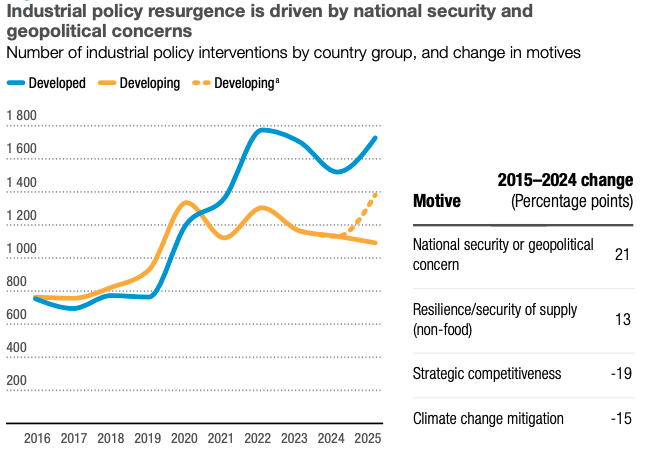
近年来,全球产业政策的政策动机发生变化,国家安全、地缘政治及供应链韧性受到更多重视。图源:联合国《2026年世界投资报告》
全球化并未消失,但其运行逻辑正在发生变化。
Globalization has not disappeared.But its organising logic is changing.
理解这一区别至关重要。当前许多讨论将经济安全与全球化视为相互对立的两种力量,仿佛各国政府必须在保持国际经济开放与退回国家经济边界之内寻求保护之间作出选择。然而,现实远比这复杂。经济安全之所以受到重视,并非因为全球化不再带来收益,而是因为随着经济相互依赖不断加深,一些在此前一体化扩张过程中不那么明显的脆弱性也逐渐显现出来。同样的经济网络,既能促进繁荣,也可能传导冲击;同样的供应链,既能提高效率,也可能形成战略依赖;同样的技术,既能推动国际合作,也可能成为地缘政治竞争的焦点。
This distinction is fundamental.Much contemporary debate treats economic security and globalization as opposing forces,as though governments must choose between an open international economy and a retreat behind national economic boundaries.The reality is more complex.Economic security has emerged not because globalization ceased to generate benefits,but because deeper economic interdependence also revealed vulnerabilities that were less visible during the earlier period of expanding integration.The same networks that distribute prosperity can transmit disruption.The same supply chains that increase efficiency can create strategic dependence.The same technologies that facilitate international cooperation can become sources of geopolitical competition.
因此,当前国际经济面临的核心挑战,不仅有如何深化相互依赖,还包括怎样有效治理这种相互依赖关系。
The central challenge facing the international economy is therefore no longer simply how to expand interdependence,but how to govern it.
对于亚太经合组织(APEC)而言,这一问题尤为重要。APEC诞生于全球化发展的早期阶段,其制度设计建立在一个独特的理念之上,即“开放区域主义”。APEC有意避免发展成为排他性的贸易集团或具有法律约束力的国际组织,而是依靠协商、共识、自愿承诺、能力建设和务实合作,推动政治制度、发展水平和国家优先事项各不相同的成员经济体开展合作。
For APEC,this question is particularly consequential.The institution was created during an earlier phase of globalization and built around a distinctive idea:open regionalism.It deliberately avoided becoming an exclusive trade bloc or a legally binding organisation,relying instead on consultation,consensus,voluntary commitments,capacity-building and practical cooperation among economies with very different political systems,levels of development and national priorities.

2026年亚太经合组织(APEC)会议宣传海报。
这种灵活性成为APEC最突出的优势之一。然而,在经济开放不断扩大的时代形成的这一制度模式,能否在战略竞争加剧、经济安全日益受到重视的今天,继续发挥同样有效的作用?
That flexibility became one of APEC's greatest strengths.But can an institutional model conceived during an era of expanding economic openness remain equally effective in an era of strategic competition and economic security?
答案未必是放弃开放区域主义,而可能是对这一理念进行重新诠释与革新。
The answer need not be the abandonment of open regionalism.It may instead require its reinvention.
本文认为,APEC未来能否继续发挥重要作用,取决于其能否在保持开放的同时,更有效地应对经济相互依赖带来的脆弱性。这一转型并不意味着APEC需要成为一个安全组织,也不要求21个成员经济体遵循统一的经济模式。相反,APEC需要以区域韧性、互操作性和具有韧性的经济网络为核心,赋予开放区域主义新的时代内涵。其目标并非让各成员经济体变得更加趋同,而是确保即使彼此之间的战略分歧不断扩大,各方仍能保持合作的能力。
This article argues that APEC's future relevance will depend upon its ability to preserve openness while responding more effectively to the vulnerabilities created by economic interdependence.Such a transformation would not require APEC to become a security organisation,nor should it impose a single economic model upon its twenty-one member economies.Rather,it requires a modern interpretation of open regionalism built around regional resilience,interoperability and resilient economic networks.The objective should not be to make APEC economies more alike.It should be to ensure that,despite their growing strategic differences,they remain capable of working together.
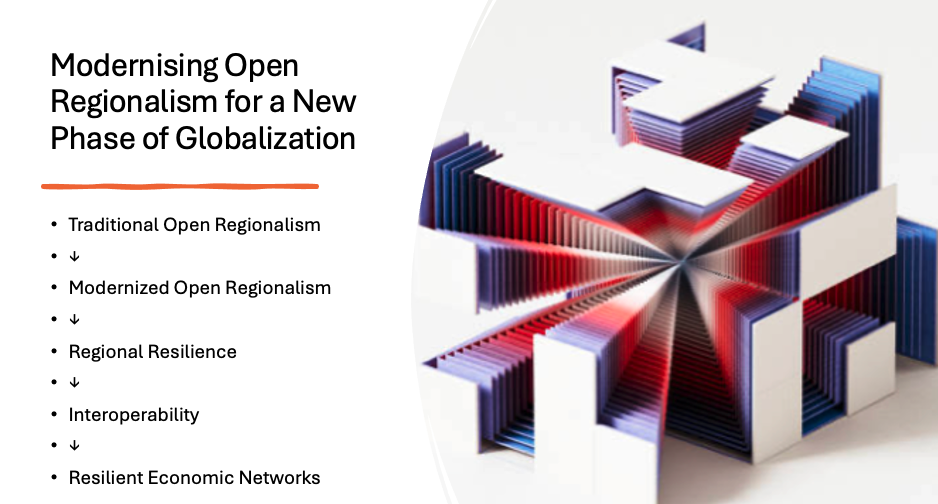
开放区域主义的现代化转型路径。面对经济安全挑战,APEC需要在坚持开放合作的基础上,更加重视区域韧性、互操作性和具有韧性的经济网络建设。图源:作者提供
从全球化走向经济安全
From Globalization to Economic Security
20世纪最后几十年,全球化进程加速推进,不仅推动了国际经济活动规模的扩大,也深刻改变了其组织方式。生产活动日益跨越国界,供应链延伸至不同大洲,金融体系之间的联系愈发紧密,技术发展也越来越依赖由科研、生产、投资、数据和知识等要素构成的国际网络。
The globalization that accelerated during the closing decades of the twentieth century transformed not only the volume of international economic activity but its organisation.Production became distributed across borders,supply chains extended across continents,financial systems became increasingly interconnected,and technological development came to depend upon international networks of research,production,investment,data and knowledge.
全球化带来的收益十分显著。更加专业化的分工降低了生产成本,国际投资扩大了生产能力,技术扩散加快了创新步伐,数以百万计的人口摆脱了贫困,尤其是在亚洲地区。
The benefits were enormous.Greater specialization reduced costs,international investment expanded productive capacity,technological diffusion accelerated innovation,and millions of people particularly across Asia were lifted from poverty.
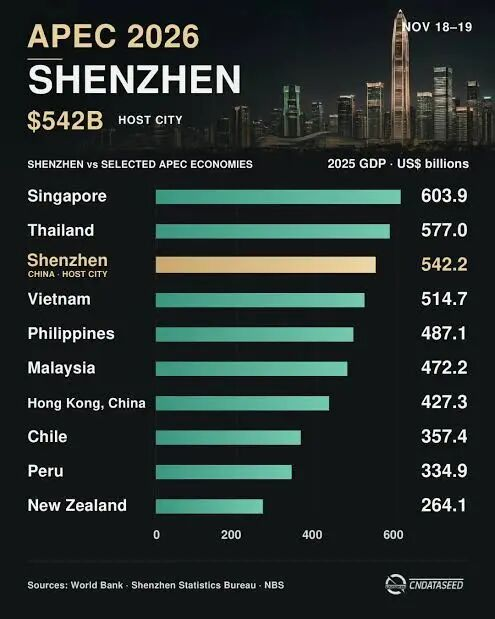
2025年深圳与部分亚太经合组织(APEC)成员经济体GDP规模对比。深圳GDP约5422亿美元,超过越南、菲律宾、马来西亚等经济体。图源:CNDataSeed;数据来源:世界银行、深圳市统计局、国家统计局
然而,这种深度一体化本身也带来了一个悖论:各经济体之间的联系越紧密,对自身无法直接掌控的外部体系的依赖也就越深。各国在关键资源、工业生产投入品、先进技术、能源和数字基础设施等方面越来越依赖外部供应商,同时也日益依赖国际金融市场和消费市场。在很长一段时间里,这些依赖关系基本上被视为高效国际分工的自然结果。
Yet the very depth of this integration created a paradox.As economies became more interconnected,they also became more dependent upon systems beyond their direct control.Countries increasingly relied upon external suppliers for critical resources,industrial inputs,advanced technologies,energy,digital infrastructure and access to international financial and consumer markets.For many years,these dependencies were largely interpreted as the natural consequence of an efficient international division of labour.
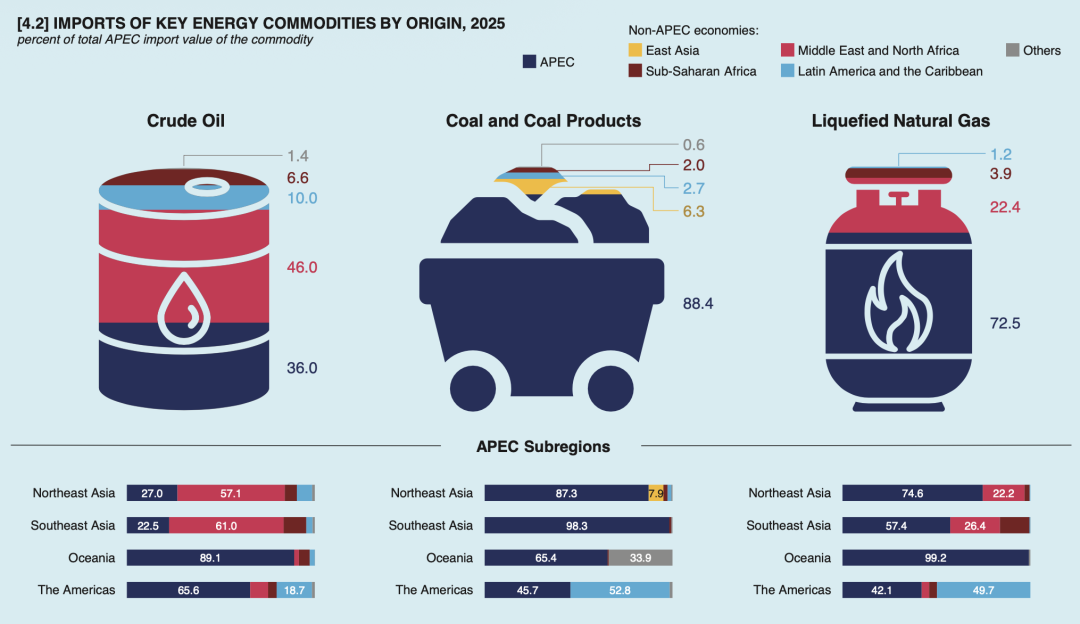
2025年APEC成员经济体原油、煤及煤制品和液化天然气的进口来源结构。其中,46%的原油进口额来自中东和北非地区。
然而,近年来的一系列危机和地缘政治紧张局势改变了人们的这一认识。能源就是一个典型例子。稳定可靠的能源供应始终是工业生产、交通运输和社会稳定不可或缺的保障。如今,从汽车、通信到人工智能和国防系统,半导体已成为几乎所有先进技术的基础。关键矿产对于数字化和绿色转型也变得至关重要。人工智能正在迅速影响生产率、技术能力和国家竞争力,而网络与数字系统则已成为金融、通信、基础设施和公共服务运行不可或缺的支撑。
Recent crises and geopolitical tensions have changed that perception.Energy illustrates the problem.Secure energy supplies remain indispensable to industrial production,transportation and social stability.Semiconductors now underpin almost every advanced technology,from automobiles and telecommunications to artificial intelligence and defence systems.Critical minerals have become essential to both digitalisation and the green transition.Artificial intelligence is rapidly influencing productivity,technological capability and national competitiveness,while cyber and digital systems have become indispensable to finance,communications,infrastructure and public services.
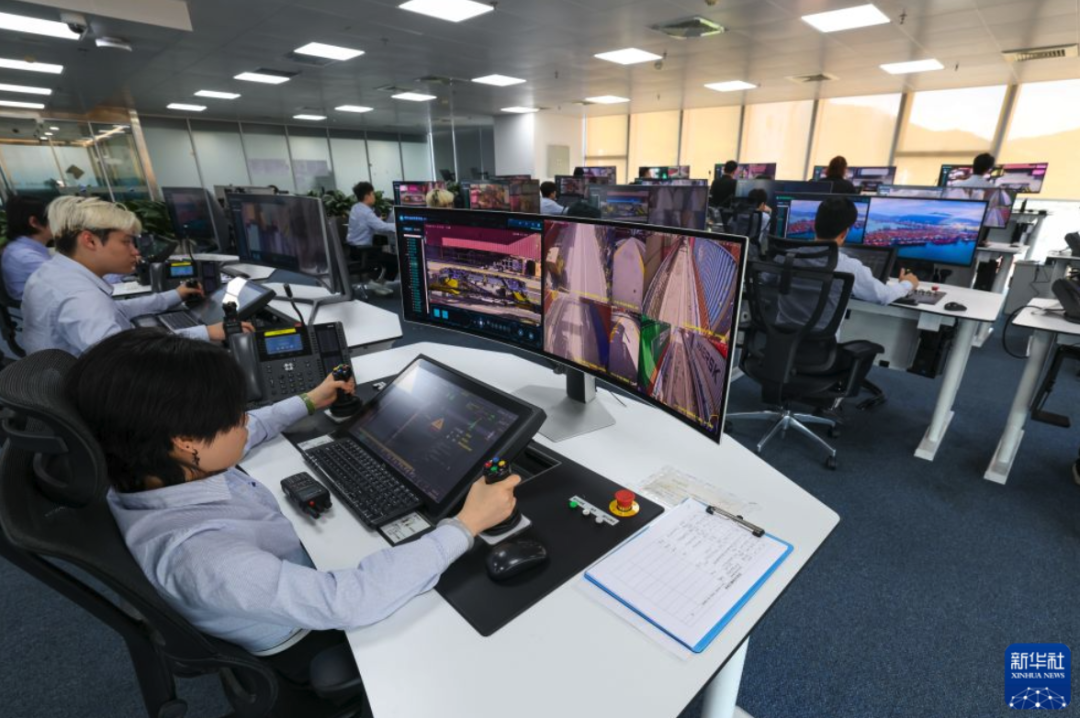
10月20日,在深圳盐田港,工作人员在盐田国际远程控制中心远程操作集装箱装卸。图源:新华社
随着这些领域在经济中的重要性不断提升,其战略意义也日益凸显。因此,各国政府开始重新思考一些在全球化蓬勃发展时期尚未显得如此紧迫的问题:
As their economic importance has grown,these sectors have acquired strategic significance.Governments have consequently begun to ask questions that would have appeared less urgent during the high period of globalization:
一国经济在多大程度上依赖少数外部供应商?
How dependent is the economy upon a limited number of external suppliers?
如果关键供应链中断,将会产生什么后果?
What happens when an essential supply chain is interrupted?
哪些技术具有足够重要的战略意义,因而需要具备自主能力或建立可信赖的国际合作伙伴关系?
Which technologies are sufficiently critical to require domestic capability or trusted international partnerships?
各经济体如何在保持国际经济联系的同时,避免因自身无法控制的外部冲击而陷入过度脆弱的境地?
How can economies remain internationally connected without becoming excessively vulnerable to disruptions beyond their control?
这些担忧使经济安全成为各国经济政策制定的核心议题。然而,经济安全不应被简单理解为经济自给自足,或是保护本国产业免受外国竞争。同样,韧性也不应仅仅被理解为承受冲击并恢复到原有状态的能力。在日益充满不确定性的国际环境中,韧性还应包括预判新兴风险、识别脆弱环节、为可能发生的冲击做好准备、调整制度和生产能力以适应变化,以及在不断变化的环境中保持有效运转的能力。
These concerns have brought economic security into the centre of economic policymaking.Economic security should not,however,be understood simply as economic self-sufficiency or protection from foreign competition.Nor should resilience be reduced to the ability to absorb a shock and return to previous conditions.In an increasingly uncertain international environment,resilience must also involve the capacity to anticipate emerging risks,identify vulnerabilities,prepare for disruption,adapt institutions and productive capabilities,and continue to perform under changing conditions.
从这一更广泛的意义上说,具有韧性的经济体必须具备规划、预测、准备和持续运转的能力。
In this broadersense,a resilient economy must be able to plan,predict,prepare and perform.
因此,经济安全并非意味着对全球化的否定,而更多是对全球化进程中各种脆弱性进行治理的尝试。这正是从全球化走向地缘经济时代的关键转变。经济联系仍在推动增长与繁荣,但贸易、技术、投资、能源和金融等领域的活动,越来越需要同时从经济价值和战略影响两个维度加以评估。APEC如今面临的问题是:这一最初旨在促进经济开放的合作机制,能否帮助各成员经济体有效应对更加复杂的经济相互依赖关系?
Economic security therefore represents less a rejection of globalization than an attempt to govern its vulnerabilities.This is the critical transition from globalization to geoeconomics.Economic relationships continue to generate growth and prosperity,but trade,technology,investment,energy and finance are increasingly evaluated simultaneously for their economic value and their strategic consequences.The question confronting APEC is whether an institution created to facilitate openness can now help its members manage this more complicated form of interdependence.
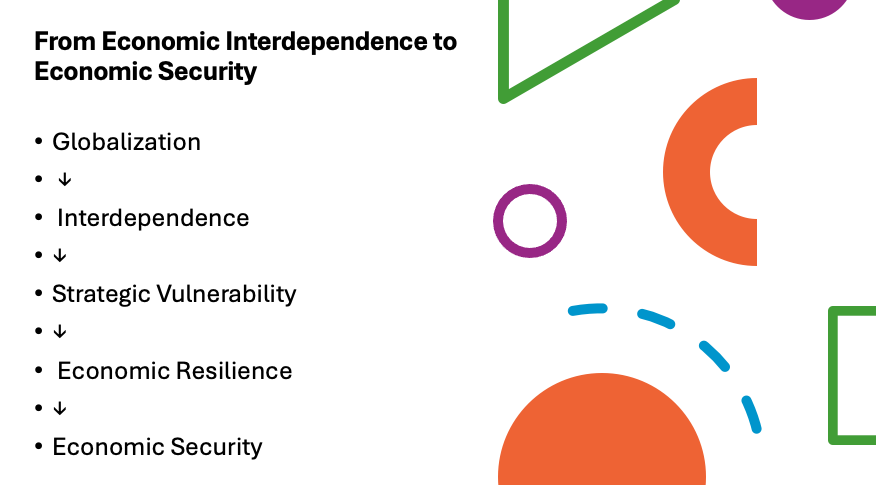
从全球化到经济安全的逻辑演进。全球化推动经济相互依赖不断加深,也使各经济体面临的战略脆弱性逐渐显现,促使经济韧性与经济安全成为政策关注重点。图源:作者提供
梅赫里·马达尔沙希(Mehri Madarshahi)
华南理工大学公共政策研究院(IPP)荣誉教授、联合国教科文组织下属国际创意和可持续发展中心(ICCSD)顾问委员会成员
Honorary Professor of The Institute of Public Policy(IPP),South China University of Technology(SCUT);
本内容来源于网络 原文链接,观点仅代表作者本人,不代表虎嗅立场。
如涉及版权问题请联系 hezuo@huxiu.com,我们将及时核实并处理。
如涉及版权问题请联系 hezuo@huxiu.com,我们将及时核实并处理。
频道: 国际热点