2014-08-13 16:01
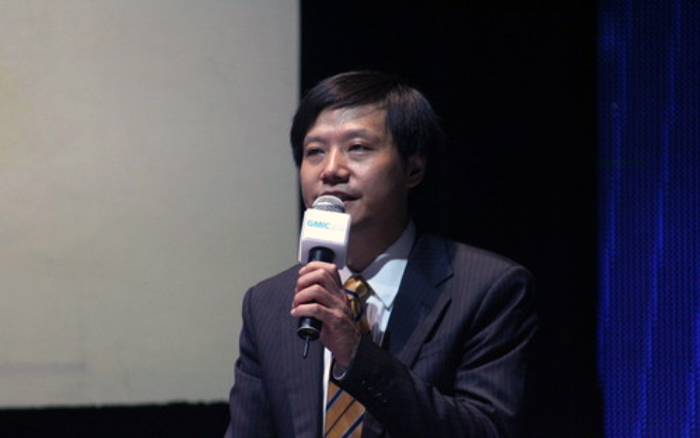
The worth of Xiaomi, a company established four years ago, is like the number of mobile phones it has sold – they change too fast. Some people worship the company, others have doubts. The estimated value of Xiaomi was 1 billion dollars one year and a half after its establishment. In a few months, it raised up to 4 billion dollars. In the second half year of last year, the number is 10 billion, which tripled at the beginning of this year. In the recent few months, it is being tagged as a “100-billion-dollar company”.
What is the real value of Xiaomi? This is not a fortune game anymore, but a fact relating to the expectations of this so-far successful start-up company.
Putting aside all the wrappings, Xiaomi is essentially a mobile phone company – it is the same as Samsung, Lenovo and Nokia. Its first task is to survive in the mobile phone market.
Samsung and Lenovo gives priority to one specific product. For Samsung, the main product is mobile phone. For Lenovo, it is PC. Lenovo also produces electronic products for families and individuals. Before Nokia was knocked off the pedestal, it is basically a mobile phone company. It is also a coincidence that all of the three companies made the Chinese market their main engine based on some kind of cost privileges – the integration privilege of Samsung, the made-in-China privilege of Lenovo, and the large-scale privilege of Nokia.
What is different is that the three companies have been selling their products worldwide, in scales that are biggest in their field. On the contrary, Xiaomi is a company with a limited Chinese market. Its rank in scale is only “reasonably well”. Until the end of last year, in almost all kinds of mainstream survey data, Xiaomi did not make it to the top ten smart mobile phone companies. In comparison, Huawei ranks the third place and Lenovo ranked 5th worldwide.
Comparing with these three companies, the cost privilege of Xiaomi comes from the elimination of intermediate links of marketing and selling, the outsourcing of manufacturing(making full use of the Chinese mobile phone production overcapacity) , and product design that targets at cost-effectiveness.
Xiaomi is disadvantaged in fields such as overall size, internationalized layout, and accumulation of intellectual property rights, which are important in the future competition. However, its weakness could not be overcame overnight.
Although Xiaomi is consistently building its uniqueness in product innovation, brand and business model in order to distract people from the mobile phone itself, its future is still hanging on three driving factors: the growing speed of the smart phone market, the competitive power in the cost-effective market, and the development of new markets (of new products and in foreign countries).
The current status of the first factor is, the development of smart phones are slowing down worldwide, and China is in lead of the deceleration. Although there are multiple differentiated data concerning the sales number of mobile phones, they have a same conclusion about Chinese smart phones. That is, the spreading speed of smart phones in China is faster than any other places in the world. Thus, its peak time also arrives earlier than other places of the world.
In 2012, the percentage of smart phone in Chinese phone market is over 50%. The world rate reached this level only last year. Last year in China, the rate has raised to over 70%. The number may have turned 80% to 90% in the first season this year. Last year, the growth of smart phone sales is 40% worldwide. In China, the rate is between 50% and 100%. Between year 2011 and 2012, the number is over 100%. In comparison, the sales of smart phone worldwide has decreased in the first season compared to the same period last year, although it is raising 20% to 30% compared to the last season. In China, the sale has gone into stagnation and is even in decline.
This means, as the rate of smart phone users raised, the sales growth of smart phones will be more and more close to the growth of the whole mobile phone market. In the past two years, the growth of Chinese mobile phone market is between 20% and 30%, which is attributed to the explosive expansion of smart phones. Institutions including IDC has predicted that the growth of this year and the coming year will fall back to 10 to 20 percent. After that, the growth rate will continue to fall to a level that is only slightly higher than the growth rate of Chinese economy.
In a market like this, any company that wants to have a growth rate of over 50% must develop a new growth engine in the oversea market, which, as we discussed earlier, is very hard for Xiaomi. Another way is to enter a new product field, with a premise that the market scale is large enough. The closest ideal market for Xiaomi is television. However, Xiaomi is making little progress in this field. Because the manufacturing process of televisions is not as independent as that of the mobile phones’, it is hard for Xiaomi to extend enough supply chain in order to support its unique business model.
Another way is having a turf war with other companies, which depends on the cost-effectiveness of products. In an era when the socialized business channel is flourishing, Xiaomi is gradually losing its advantage gained by disintermediation. In the market abroad, operator sale is the main channel. For companies like Huawei and Lenovo (which purchased Motorola Mocity) that have already established operator networks, the situation is more advantageous. In the meantime, the supply chains that is developed by Xiaomi could fall into the hands of its competitors.
Let us put the time forward to 2016. At that time, the Chinese smart phone market will fall back to a normal growth rate of 10% or less. The growth and profit level of Xiaomi will also be stabilized, like those of Apple and Samsung today. So 2016 would be a reasonable choice of a reference point for evaluation. We should also assume two situations:
In the first, the sales of smart phones in China in 2016 would be 5.8 hundred million. And Xiaomi would take up 25% of the share. That is 1.45 hundred million (which means a compound growth of 60% over the last two years, which is extraordinary but possible). We assume that the average price of mobile phone has fallen from 219 dollars to 130 dollars. Thus, the income of Xiaomi in 2016 would be 18.8 billion dollars. Then assume that mobile phone sales take up 75% of all the income of Xiaomi, then in 2016, the total income of Xiaomi would be 25 billion dollars.
In another assumption, the share of Xiaomi in 2016 is 15% (the estimated sale number would be 87 million, if Xiaomi accomplishes 60 million this year, then the compound growth rate of the next two years should be 20%). The average price is 150 dollars. With mobile phone sales taking up 20% of the income, the total income of Xiaomi in 2016 would be 16.3 billion dollars.
We assume that the possibility of the first situation is 35%, and 65% for the second (we have another circumstance to discuss, but not here). The expected average income of Xiaomi in 2016 would be 19.4 billion dollars, which is in accordance with the statement of Lei Jun that “income in 2016 will exceed 100 billion yuan”.
Next, let us predict the gross and net profit rate of Xiaomi in 2016. In the past three years, the gross profit rates of Samsung are 32%, 37%, and 39.8%. The same rates of Lenovo are 11.7%, 12%, and 13.1%. Zhongxing Telecom (ZTE), a company that is dual-listed, has a gross profit rate of 14 to 16%. The income from terminal service takes up 30% of its total income.
It is difficult for Xiaomi to reach the gross profit rate of Samsung, as Samsung has a machine part business and a higher ratio of high-end products. The gross profit rate of Xiaomi, according to its business model and product positioning, will be slightly higher than ZTE. For example, 18%, which is two percent higher. Price wars will prevent this number from going upwards. So we assume that the gross profit rate of Xiaomi will remain 18% in 2016.
Then we have to estimate the operation cost ratio of Xiaomi in 2016. In this respect, using indexes of Jingdong is more reliable – the main income of Xiaomi comes from E-commerce, which includes contents and technology, marketing, logistics, and management fees. The scale of Xiaomi this year is estimated to be a little smaller than that of Jingdong last year. The ratio of Jingdong last year was 10.7% and 13.7% the year before. It is estimated that the ratio will be 10% this year. Since the scale of Xiaomi in 2016 will be about the same as Jingdong today, we assume its cost ratio would be 10% that year.
By eliminating taxes, the estimated net profit rate of Xiaomi in 2016 is 6%. Thus, the net profit of Xiaomi in 2016 would be 1.16 billion dollars.
The number goes between Samsung and Lenovo. The net profit rate of Samsung in the last four seasons is 13.1%. In the past 8 years, the average profit rate is 9%, with a median of 8.7%. Up until March of this year, the net profit of Lenovo is 2%, which has been steadily growing over the years.
Then, the question is what kind of index to use in this assessment. In this circumstance, PEG is preferred. The growth rates of income of Lenovo in the past two years are 15% and 14%, with net profit growth rates of 34% and 28%. For Samsung, the income growth rates are 22% and 13.7%, with a profit growth rate of 73.3% and 27.8%. We assume that several years after 2016, the income and profit growth rate of Xiaomi will be at the same level of Lenovo and the double of Samsung.
Calculated according to the income and profit published in the financial reports of the last four seasons, the average PE rate of Samsung in the last two years is 6.54. The PE of Lenovo is 15. If we assume the PE of Xiaomi in 2016 is 13 to 15, then the estimated value of Xiaomi in 2016 would be 15.1 to 17.4 billion dollars.
Given a required return of 20%, the current value would be 9.5 to 11 billion dollars when we discount the value for two and a half year. If we use the median, the current market value of Xiaomi is 10.3 billion dollars.
Source: Huxiu.
Author: 尹生价值线
本内容由作者授权发布,观点仅代表作者本人,不代表虎嗅立场。
如对本稿件有异议或投诉,请联系 tougao@huxiu.com。
如对本稿件有异议或投诉,请联系 tougao@huxiu.com。